Few genre labels cause as many arguments as these two. Stores and reviews often use roguelike and roguelite as if they were the same, yet they describe different things. Here is where the words come from and how to tell them apart.
Where the word comes from
Roguelike means, literally, like Rogue: a dungeon game released in 1980 and written by Glenn Wichman and Michael Toy when they were students at the University of California, Santa Cruz. The term spread around 1993 through Usenet discussion groups, where fans needed a name for the games that followed its formula.
What makes a roguelike
In 2008, at the International Roguelike Development Conference in Berlin, a list of features known as the Berlin Interpretation was drawn up. It is a way of measuring how close a game is to the original model, not a strict rulebook. Its main factors are these:
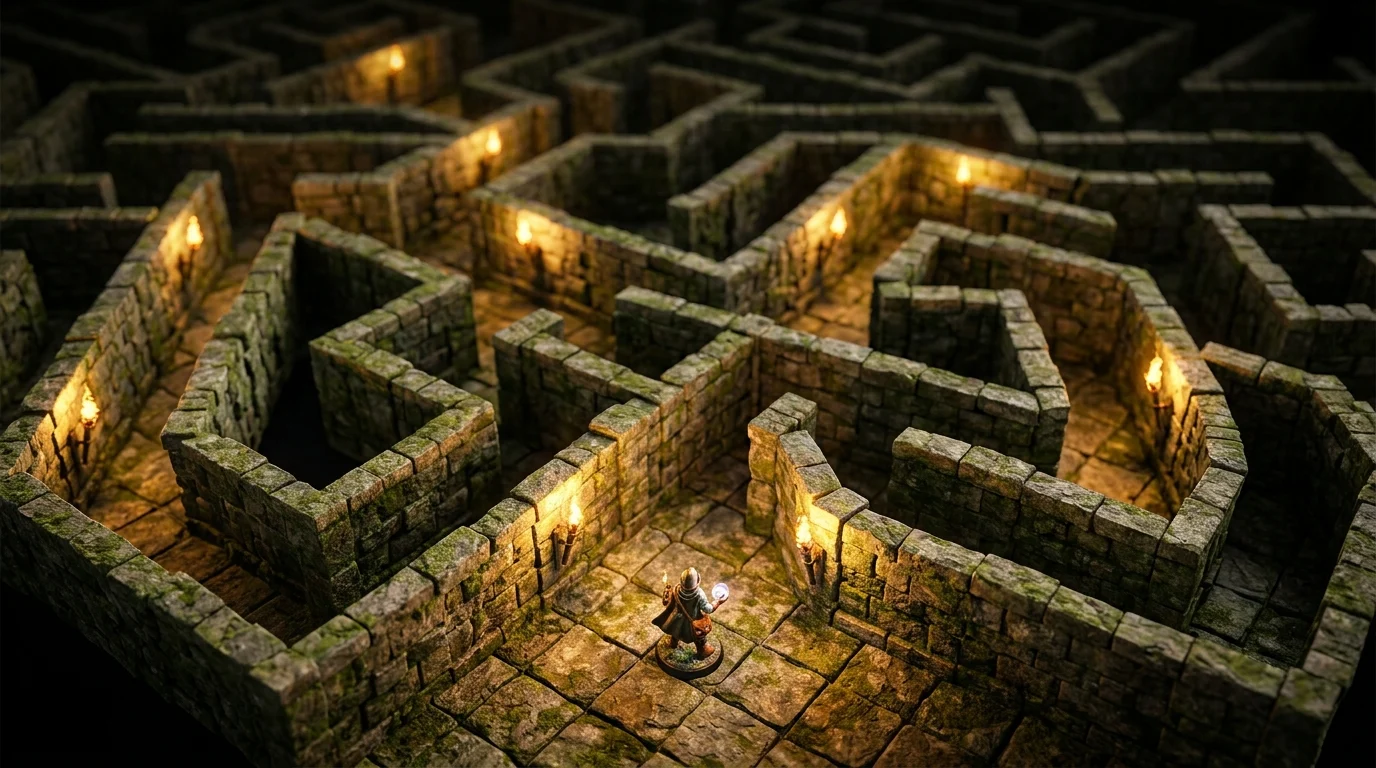
- Randomly generated dungeons, different on every attempt.
- Permadeath: when your character dies, you start again from the beginning.
- Turn-based play on a grid.
- Every action available at any moment, with no separate modes.
- Enough complexity for unexpected situations and solutions to emerge.
- Resource management, combat against many monsters, and items that have to be discovered and identified.
NetHack, from 1987, is the classic example of a traditional roguelike.
What makes a roguelite
A roguelite takes some of those ideas and leaves out others. Runs tend to be shorter and have a clear ending, replayability is central, and there are fixed moments such as boss fights.
The feature most often used to draw the line is meta-progression. In a roguelite, reaching goals or collecting resources unlocks things that persist: new characters, items or enemies that appear in later runs. You still lose the run when you die, but not everything you earned.
Examples
- Spelunky (2008) applied the formula to a platform game.
- The Binding of Isaac (2011) did it with a shooter.
- FTL: Faster Than Light (2012) took it to spaceship strategy.
- Slay the Spire (2017) mixed it with deck-building.
- Hades and Vampire Survivors are two of the best-known later cases.
So which word should you use?
In everyday use, roguelike covers both. If you want to be precise: a game with turns, a grid and nothing carried over between attempts is a roguelike; a game that borrows the random runs and permadeath but lets you unlock permanent progress is a roguelite.
Frequently asked questions
What is the difference between a roguelike and a roguelite?
A traditional roguelike has random levels, permadeath and turn-based play on a grid, and nothing carries over between attempts. A roguelite keeps only some of those traits and usually adds permanent unlocks between runs.
Where does the word roguelike come from?
From Rogue, a dungeon game released in 1980 and written by Glenn Wichman and Michael Toy.
What is permadeath?
A rule by which the death of your character ends the attempt and you start again from the beginning, instead of loading a saved game.
This article was written with AI assistance from the sources linked above.