FPS stands for frames per second: the number of images a game draws every second. The graphics card is what produces those frames, and the higher the number, the smoother the movement looks.
Why more FPS feels better
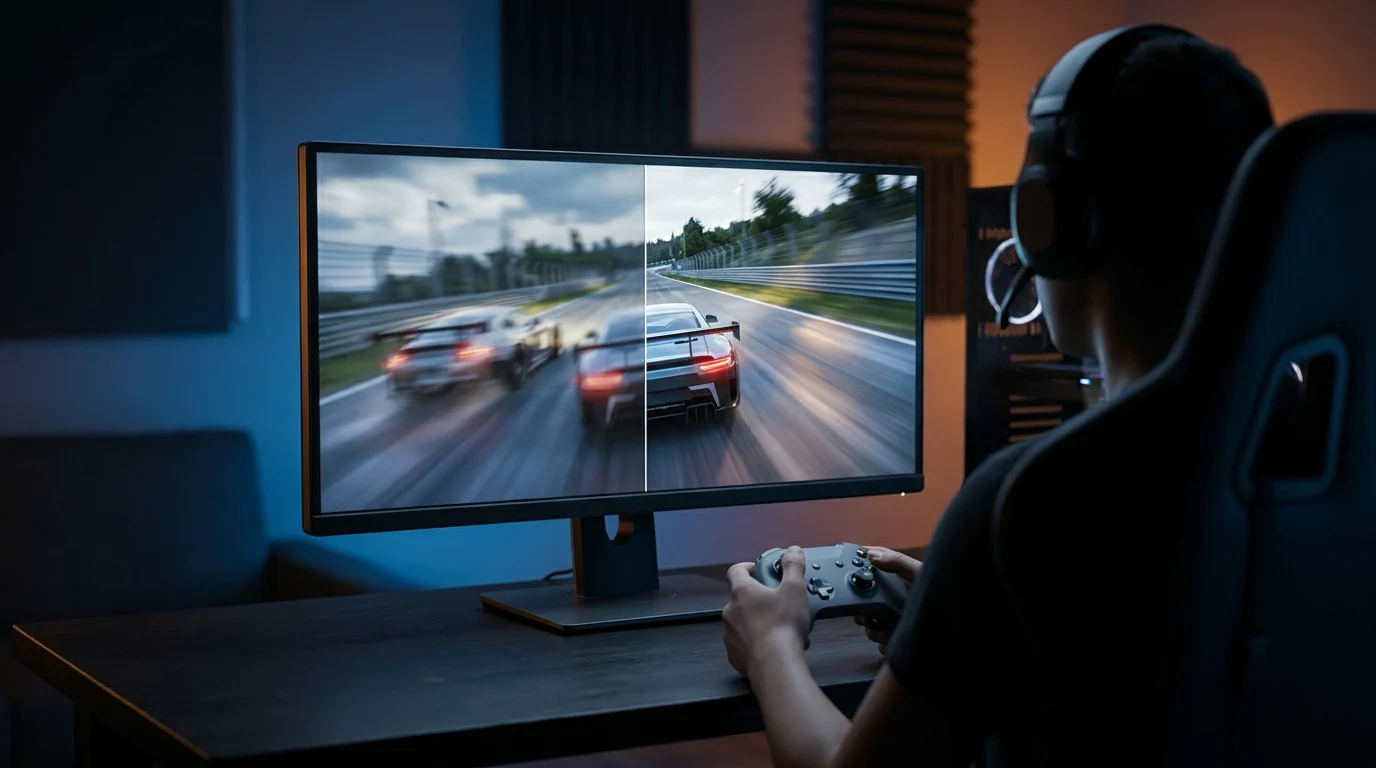
With a higher frame rate, fast action looks less blurry and the game reacts sooner to your button presses, because input latency goes down. For a long time, 60 FPS has been considered the minimum for smooth gameplay, while film traditionally runs at 24. Competitive PC monitors can go much higher, to 360 or even 500.
Frame time matters too
Frame time is how long passes between one frame and the next. A game can average 60 FPS and still feel choppy if those times are uneven. That is why reviews often look at the worst moments, such as the 99th percentile, and not just the average.
FPS and hertz are not the same
Refresh rate, measured in hertz (Hz), is how often your screen displays a new image. FPS depends on the game and your hardware; hertz depends on the screen.
Tearing, V-Sync and VRR
- Tearing: the image looks split horizontally when the game’s frame rate does not match the screen’s refresh rate
- V-Sync: reduces tearing by capping the frame rate to the refresh rate, but adds input lag and can cause judder
- Variable refresh rate (VRR): the screen adjusts its refresh rate to the game’s frame rate, as long as it stays within the range it supports
If you play over the internet instead of on your own hardware, see also our guide to cloud gaming.
Frequently asked questions
What does FPS mean in games?
Frames per second: the number of images the game draws every second.
Is 60 FPS enough?
60 FPS has long been considered the minimum for smooth gameplay. Higher rates feel smoother and reduce latency, but some people find it hard to notice the difference.
What is the difference between FPS and Hz?
FPS is how many images the game produces each second; hertz is how many times the screen refreshes each second.
This article was written with AI assistance from the sources linked above.