An idle game is one that keeps making progress with very little input from the player, sometimes even while it is closed. It belongs to a wider family called incremental games, built around accumulating a resource and watching the numbers grow, slowly at first and then at great speed.
Idle, clicker, incremental: the terms
Incremental is the general name. When a game revolves around actively clicking or tapping, it is usually called a clicker. When it advances mostly by itself, it is called an idle game. Many titles mix the two: you start by tapping and end up managing a machine that runs alone.
How they work
- You begin with a simple action, usually a click or a tap, that earns currency.
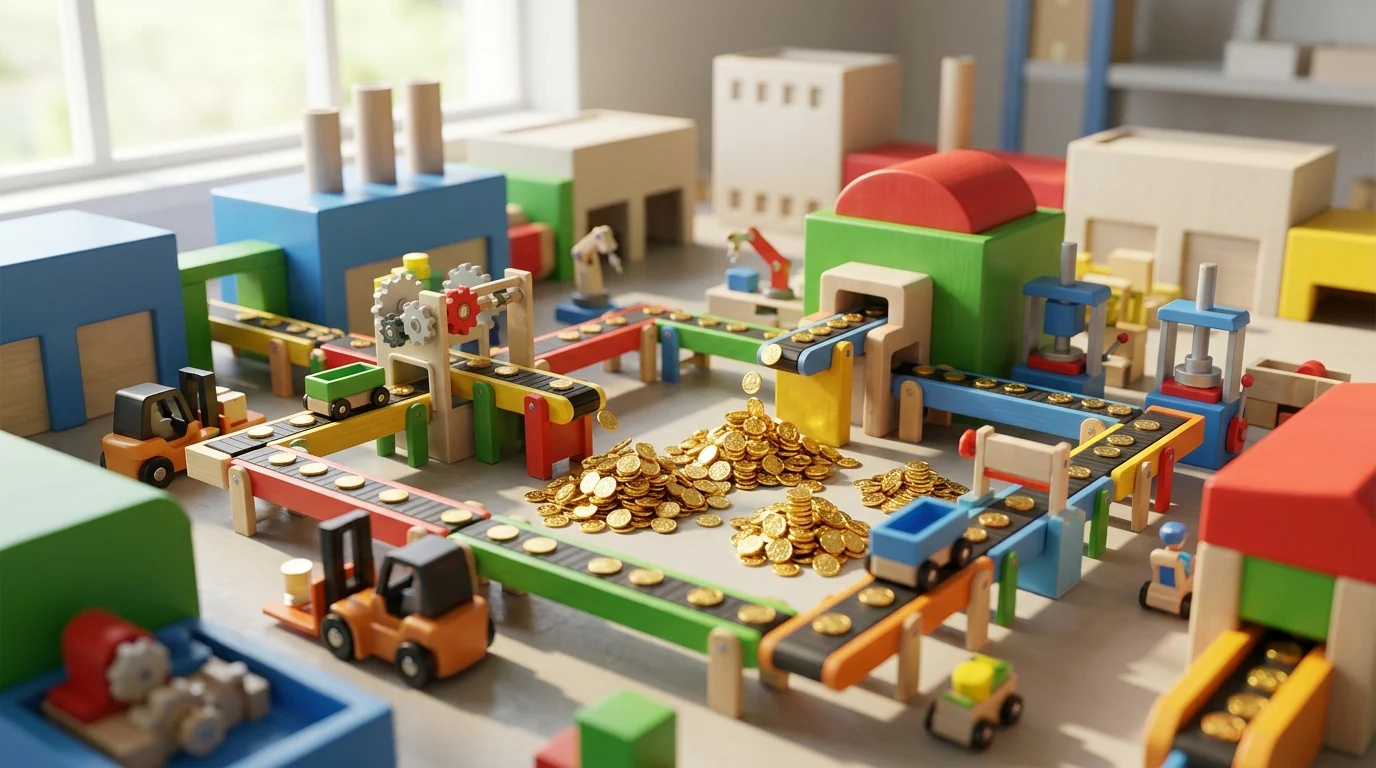
- That currency buys things that generate income by themselves, often presented as buildings such as farms or factories.
- Each new tier costs exponentially more than the last, so there is always something just out of reach.
- The numbers get so large that games show them in scientific notation or with abbreviations.
- Offline progress: the game works out what you earned while it was closed.
- Prestige: you reset your progress in exchange for permanent bonuses that carry over to the next run.
Some can be played indefinitely, like Cookie Clicker. Others, such as Candy Box! and Universal Paperclips, have an ending.
A short history
- 2002: Progress Quest, by Eric Fredriksen, parodies the statistics and automated combat of online role-playing games. It is credited with creating the genre.
- Cow Clicker, a Facebook game, becomes the first of its kind to get mainstream media attention.
- 2013: Candy Box! and Cookie Clicker arrive, and the genre takes off after the success of the second.
- AdVenture Capitalist adds earnings while the game is not running and pioneers the way these games make money.
- 2015: Clicker Heroes, considered an early pioneer of prestige on mobile, and similar games spread on Steam.
How they make money
They earn through optional purchases, such as instant currency, time skips or permanent multipliers, and through adverts that grant a small reward, like doubling what was earned offline.
Why people get hooked, and the criticism
Kotaku’s Nathan Grayson has attributed their popularity to being an undemanding distraction that fits into daily routines. Not everyone is convinced: one description collected by Wikipedia calls many of them glorified spreadsheets, and the creator of Cookie Clicker has referred to his own works as non-games.
Frequently asked questions
What is an idle game?
A game that progresses with minimal interaction from the player, typically by automating the production of a resource, and that often keeps earning while it is closed.
What is the difference between an idle game and a clicker game?
Both are incremental games. A clicker centres on actively clicking or tapping; an idle game centres on progress that happens with little input. Many games combine both.
What does prestige mean in an idle game?
Resetting your progress voluntarily in exchange for permanent bonuses that carry over to future runs.
This article was written with AI assistance from the sources linked above.